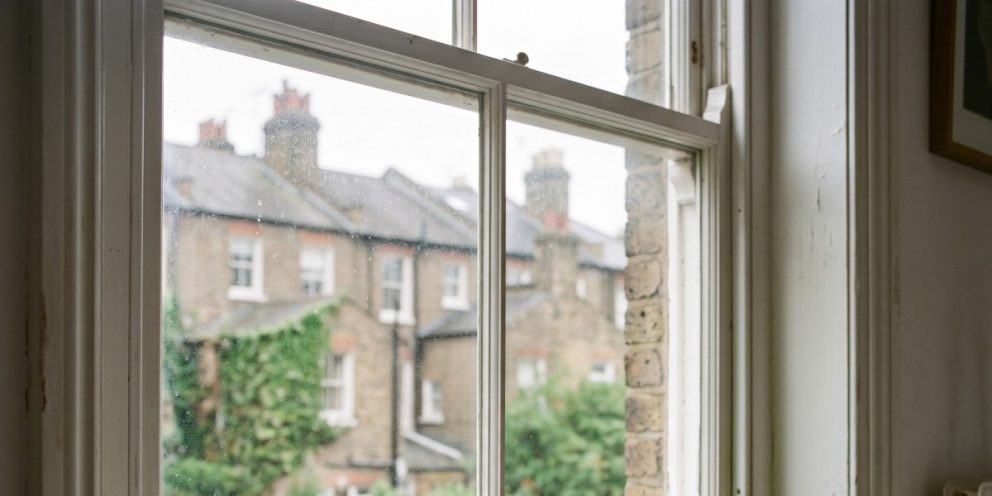
So, you are moving out. The flat looks cleaner than it has in years: carpets hoovered, kitchen degreased, bathroom scoured. And yet something still feels unfinished. More often than not, that feeling is warranted – and the explanation is the windows. Not the glass, which most tenants do at least attempt before they leave, but everything surrounding it: the frames streaked with years of condensation staining, the sills ringed from plant pots and cluttered objects, the tracks so compacted with grime that they barely slide any more. In London’s rental market, these are the details that letting agents and inventory clerks are trained to identify. In an area like Belsize Park, where Victorian and Edwardian conversions command premium rents and check-out standards are correspondingly high, they almost always do.
Why Letting Agents Inspect More Than Just the Glass
What the Check-Out Inventory Actually Looks For
A professional check-out inventory is not a casual walkthrough. In London’s private rental sector, inventory clerks work from a detailed schedule of condition – a document compiled at the start of the tenancy that records the state of every surface, fitting and fixture in the property. Windows are not listed as a single line item. Frames, sills, tracks and glass are assessed individually, each carrying their own condition notes and, increasingly, photographic evidence taken at move-in. A tenant who returns a property with spotless glass but dirty frames and silted tracks is not returning the windows in the condition the inventory describes. The cleaning charge that follows is both predictable and entirely defensible.
The Most Common Deposit Disputes Involving Windows
Window-related cleaning charges are a recurring feature in adjudications handled by the Tenancy Deposit Scheme and similar bodies. The disputes cluster consistently around the same issues: mould growth on silicone seals and frame corners, compacted black tracks untouched for years, condensation staining on painted timber, and paint splash from in-tenancy decorating that tenants assumed would pass unnoticed. Each of these is photographable, documentable and supportable as a cleaning charge – which is precisely why they appear so persistently in contested claims.
Window Frames – The Component Tenants Most Often Miss
uPVC, Timber and Aluminium Frames Each Need a Different Approach
Belsize Park sits at the heart of one of London’s richest architectural mixtures. Its streets are lined with large Victorian and Edwardian conversions – many of them subdivided into flats across the past century – alongside purpose-built mid-century blocks and newer developments closer to Swiss Cottage and Finchley Road. That architectural variety is reflected directly in the windows. Timber sash frames, original or replacement, are common in the period conversions throughout NW3. uPVC frames dominate in the purpose-built rental stock. Aluminium profiles appear in newer builds and recent refurbishments.
Each material has its own cleaning requirements and its own vulnerabilities. Bleach-based products applied to uPVC cause irreversible yellowing. Abrasive pads on painted timber strip the finish and can be classified as damage rather than fair wear and tear. Certain solvent cleaners streak anodised aluminium in ways that cannot be fully corrected. A professional end of tenancy cleaning team selects the correct product and method for each substrate – not as a matter of preference, but because using the wrong one creates a new problem on top of the existing one.
Dealing with Mould, Condensation Staining and Paint Splash
Three types of frame contamination arise most frequently at end of tenancy in this part of London. Mould is the most serious. It develops along silicone beads, in the corners where frame meets glass, and on the surface of painted timber in poorly ventilated rooms – a structural reality in many older conversions across Belsize Park and the wider NW3 area. Surface mould requires an antifungal treatment and adequate dwell time; a quick spray-and-wipe with a general-purpose cleaner will not resolve it. Condensation staining presents as grey or brown tide marks on frames and surrounding plasterwork; it responds well to a mild alkaline cleaner but must be fully dried afterwards to prevent immediate recurrence. Paint splash occupies a separate category: if the tenancy agreement forbids unapproved decorating, paint on window frames may be treated as damage rather than dirt, which affects deposit liability in a materially different way.
Window Sills – Dust, Grime and the Hidden Buildup Underneath
Internal Sills vs External Sills – What’s in Scope
There is a consistent point of confusion among tenants about which window sills fall within their cleaning obligations. The general principle in the London private rental sector is that internal sills are the tenant’s responsibility; external sills are the landlord’s, unless the tenancy agreement explicitly states otherwise. At ground-floor level, external sills are often included within a professional end of tenancy clean as a matter of course. Above that, they fall outside standard scope unless specialist access equipment has been arranged in advance.
Internal sills in Belsize Park’s period properties deserve particular attention. Deep stone sills – original to many of the Victorian and Edwardian builds in the area – alongside tiled sills in converted flats are generous surfaces that accumulate a great deal over the course of a tenancy: layered dust bonded by humidity, plant pot rings, limescale residue from watering, and marks left by years of window-sill clutter. Inventory clerks photograph them at move-in and expect them returned to that condition at the end.
How Professionals Clean Stone, Tile and Painted Timber Sills
The correct sequence matters more than most tenants appreciate. Professional cleaning begins with dry removal of loose debris – brushing and vacuuming before any liquid is applied. Wiping a wet cloth over dry grit scratches stone and painted surfaces, producing marks that read as damage rather than a cleaning failure. Once the surface is clear, a pH-neutral detergent is applied, allowed to dwell, then agitated with a non-scratch pad, rinsed and dried. Tiled sills with limescale deposits require a separate treatment using a dilute acid-based product – effective, but capable of damaging grout if left too long, and not something to apply without a clear understanding of what you are working with.
Window Tracks and Runners – The Most Neglected Part of Any Tenancy Clean
Why Tracks Are Almost Always Filthy by Move-Out
Window tracks are horizontal channels, and horizontal channels collect everything. Dust and dead insects settle first. Moisture follows, creating a paste that binds debris to the surface. Over months and years this layer compacts into a dark, adhesive residue that is largely impervious to a standard wipe-down. In properties with sash windows – which account for a large proportion of rental stock across Belsize Park and Hampstead – the situation is compounded further by box channels, pulley recesses and staff bead channels that are entirely invisible from the surface. A five-year tenancy in an older NW3 flat can leave sash window tracks in a condition that takes a trained operative with the correct tools the better part of half an hour per window to resolve properly.
The Professional Method for Cleaning Sliding and Sash Window Tracks
The professional approach to track cleaning follows a fixed sequence. A vacuum with a crevice attachment removes loose debris first. A degreasing solution is then applied to the channel and allowed time to break down the bonded grime. A detail brush – sized to match the channel width – agitates the loosened material, which is extracted using a damp microfibre cloth folded precisely to fit the track profile. A final dry pass removes all remaining moisture. In sash windows, pulley wheels and counterweight channels receive separate attention. These components are almost universally overlooked by cleaning companies without specific experience of period properties – and inventory clerks working regularly across Hampstead and Belsize Park are well aware of them.
Glass – Getting It Right Without Streaks or Residue
Inside Glass Cleaning as Part of a Full Window Clean
Glass is the last component cleaned, not the first. The sequencing is deliberate: frames, sills and tracks all produce drips, splash-back and loosened debris during cleaning, and any of it settling on freshly cleaned glass means starting again. Once the surrounding surfaces are complete, interior glass is cleaned using a squeegee and a professional-grade solution, with a detail cloth worked carefully around the edges and into the corners the blade cannot reach. Consumer spray-and-wipe products leave a thin surfactant residue that dries into the smeared, streaky finish that inventory photographs pick up clearly under natural light. In period properties, original single-glazed panes often carry minor inherent imperfections – slight bubbles, hairline scratches from historic cleaning – and these should be formally noted with the landlord or letting agent before the tenancy ends, to avoid liability being raised at check-out.
End of Tenancy Window Cleaning in Belsize Park and NW3 – What to Expect From a Professional Service
What a Professional End of Tenancy Window Clean Includes
A professional end of tenancy window clean covers all internal frames, sills, tracks and glass on every accessible window in the property. External glass at ground-floor level is typically included within the standard scope; above that it requires a separate specialist access arrangement. Reputable London end of tenancy cleaning companies provide a written scope of works and a checklist aligned to ARLA-standard inventory requirements – documentation that carries genuine weight in a deposit dispute if one is raised.
Timing and Access
The most effective approach is to have the full end of tenancy clean – windows included – completed after all furniture has been removed from the property and before the check-out inventory appointment. Cleaning before furniture is moved out means that sills and tracks adjacent to large pieces cannot be properly reached. Cleaning after the inventory has already taken place serves no practical purpose. The clean should be timed to the closing days of the notice period, leaving the shortest possible gap between completion and the clerk’s arrival.
A window is only clean at end of tenancy when every component meets the standard set at move-in: a frame free of mould, staining and paint residue, a sill showing no trace of accumulated use, tracks that run cleanly with no compacted grime, and glass that reflects evenly under the natural light that inventory photographs are almost always taken in. These are the standards that check-out assessments are measured against – and they are entirely achievable, provided each component is understood, approached with the right materials and cleaned in the correct order.